
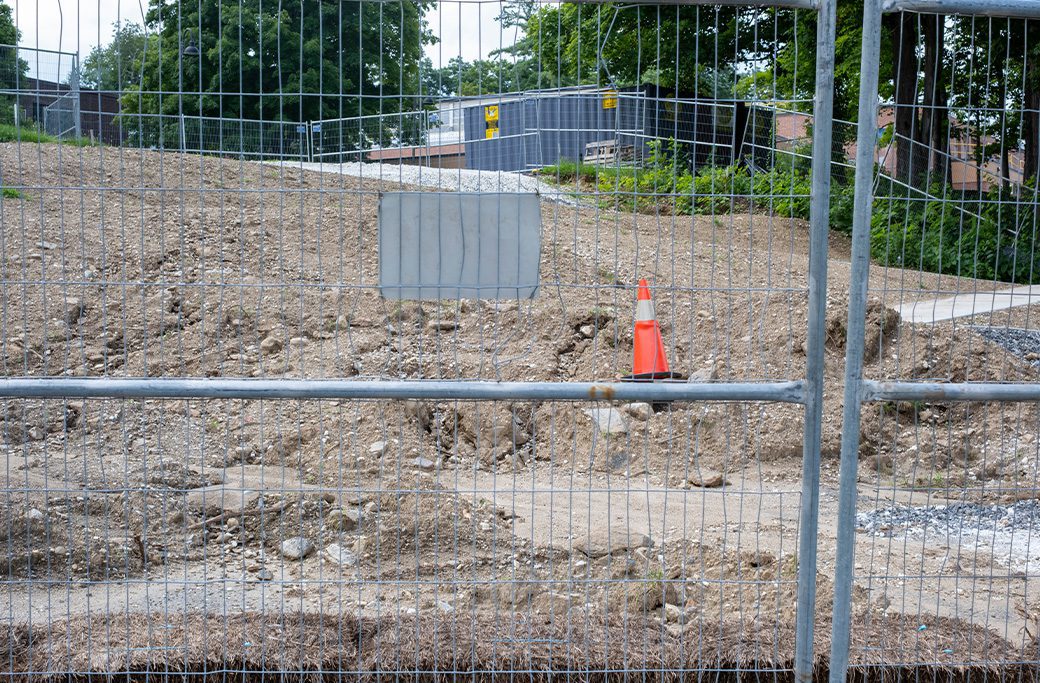
Quick answer: Temporary fencing works by creating a secure, removable perimeter around a construction site, event, property, or other designated area. Fence panels are connected to create a continuous barrier and supported with appropriate bases, footings, or stabilization systems. Gates and access points can be added where needed, and the fencing can be removed or reconfigured when the project is complete.
Unlike permanent fencing, temporary fencing is designed to provide security and separation without permanently altering the property.
How Is Temporary Fencing Installed?
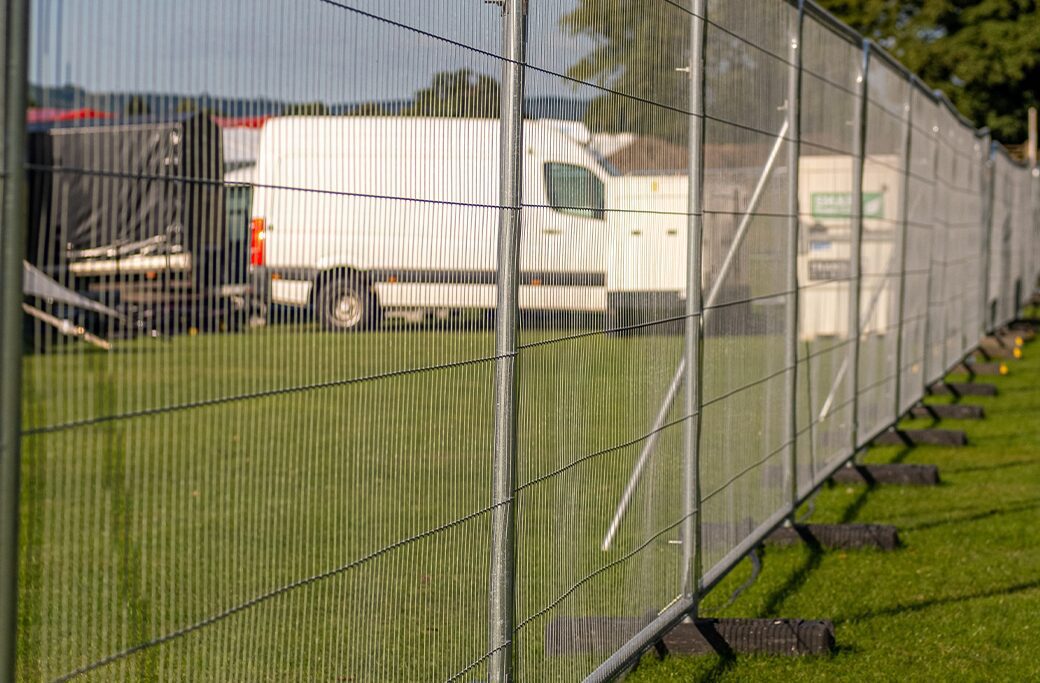
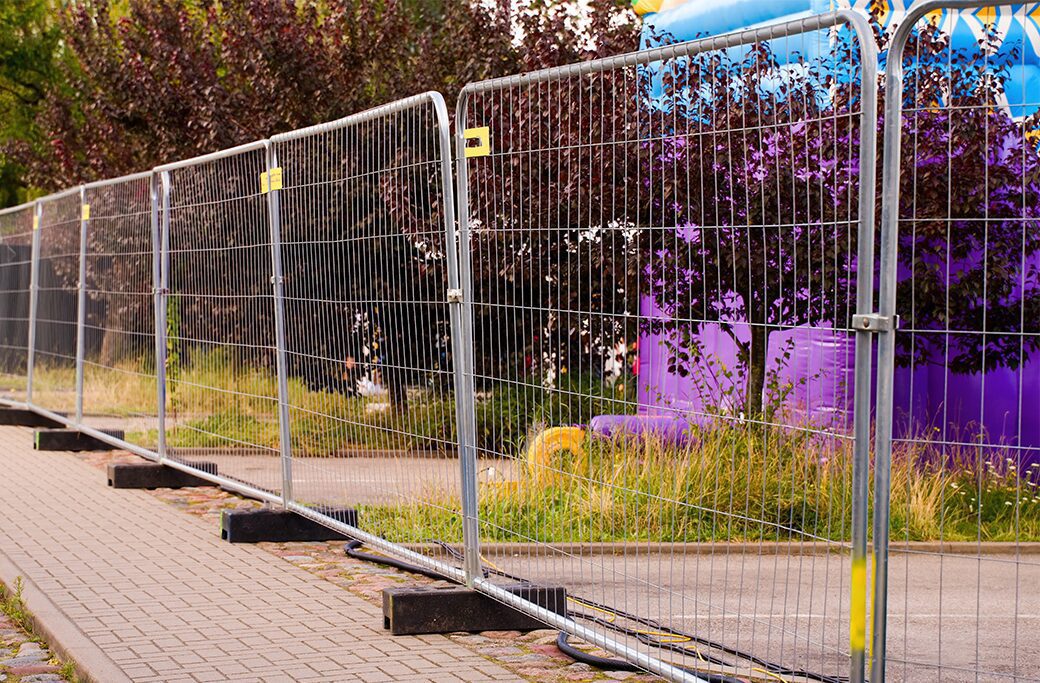
Temporary fencing is typically installed using freestanding panels rather than permanently setting posts into the ground.
Depending on the fencing system and site conditions, installation may include:
-
- Positioning fence panels around the designated area
- Connecting panels to create a continuous perimeter
- Adding appropriate bases or footings for stability
- Installing gates for workers, vehicles, or event attendees
- Adjusting the layout to accommodate the site’s specific needs
The installation method depends on the type of temporary fencing being used and the conditions of the site.
How Is Temporary Fencing Kept Stable?
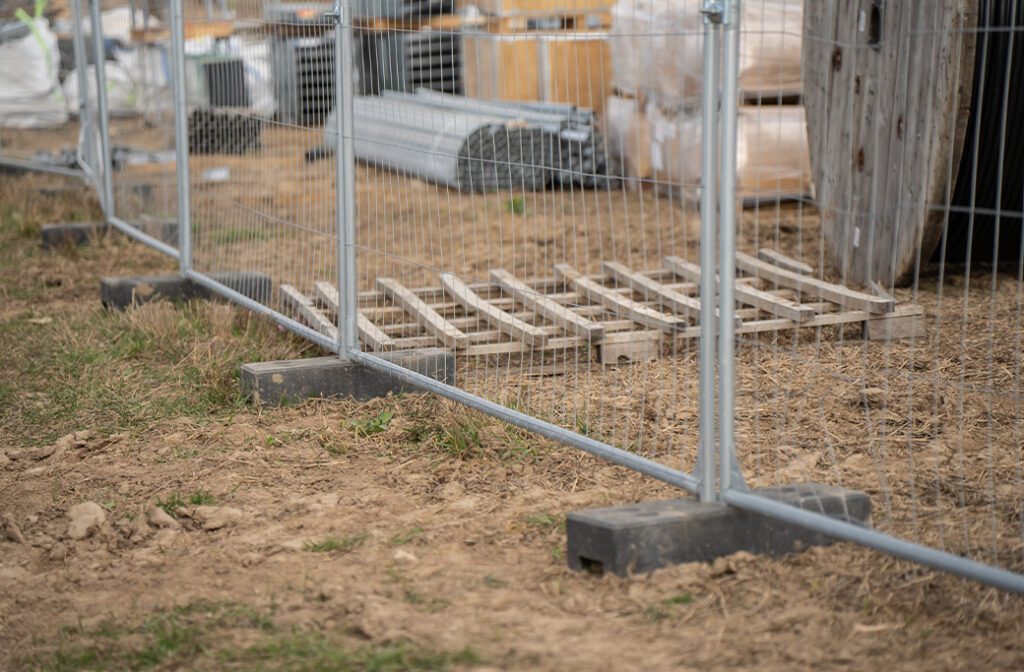
Temporary fencing needs to remain stable throughout the rental period, particularly when exposed to wind, rain, heavy foot traffic, or changing ground conditions.
Mobile Fencing Inc. uses different stabilization methods depending on the fencing system and project requirements. Solid rubber footings and other appropriate support systems can help keep panels securely positioned.
For exposed sites or challenging weather conditions, the fencing layout and stabilization should be planned with the site’s conditions in mind.
What Can Temporary Fencing Be Used For?

Temporary fencing can be used wherever a temporary boundary, security perimeter, or controlled-access area is needed.
Common applications include:
-
- Construction sites: Secure work zones, equipment, and materials
- Outdoor events: Control crowds and create designated areas
- Sporting events: Separate spectators, players, and restricted areas
- Landscaping projects: Protect newly completed work and active work zones
- Municipal projects: Establish boundaries around temporary work areas
- Property protection: Restrict access to areas undergoing repairs or improvements
The appropriate fencing solution depends on the project’s security, access, and site requirements.
Can Temporary Fencing Include Gates?
Yes. Gates can be incorporated into many temporary fencing layouts to provide controlled access.
For construction projects, gates can allow workers, equipment, and delivery vehicles to enter and exit the site. At events, gates can help establish designated entrances, exits, staff-only areas, or other controlled-access zones.
Planning gate locations in advance can make the site easier and safer to navigate.
Can Temporary Fencing Be Moved?
One of the major advantages of temporary fencing is its flexibility.
Depending on the fencing system and project requirements, panels can be removed, relocated, or reconfigured as the site changes. This can be particularly useful for construction projects where work areas shift or events where the layout needs to accommodate different activities.
Instead of committing to a permanent perimeter, temporary fencing can adapt as the project progresses.
How Does Temporary Fence Rental Work?
The rental process is generally straightforward:
-
- Discuss your project: Tell the fencing provider about your site, timeline, and security or access requirements.
- Determine the fencing needed: Your provider can recommend an appropriate system and estimate the amount of fencing required.
- Plan the layout: Fence placement, gates, entrances, and restricted areas are determined.
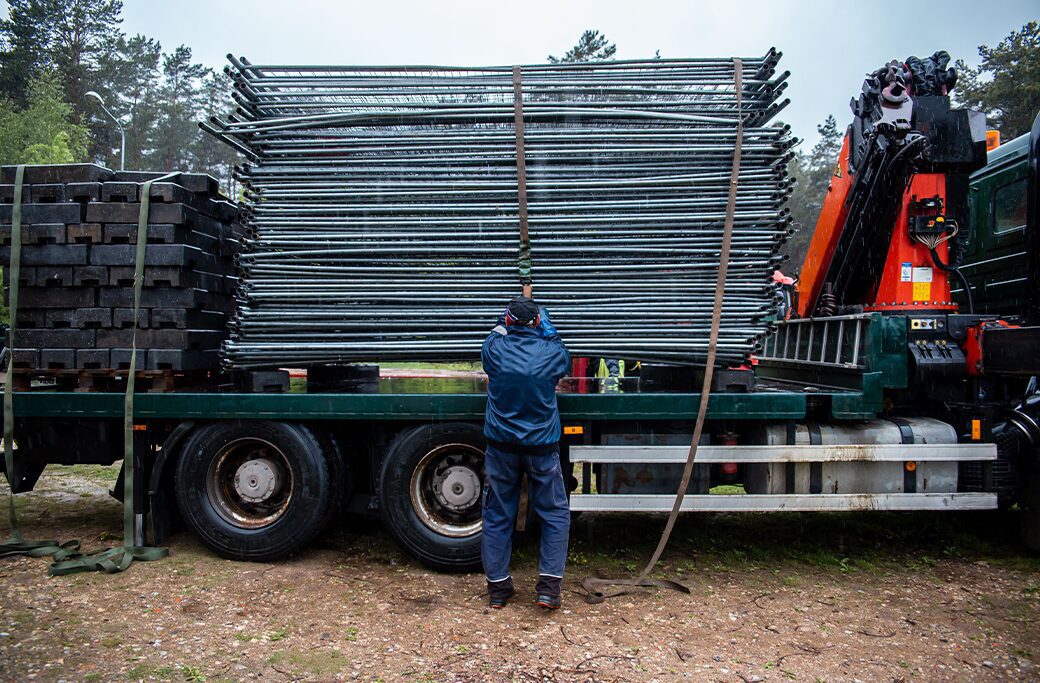
- Delivery and installation: The fencing is delivered and installed according to the agreed-upon layout.
- Rental period: The fencing remains in place for the duration of your project or event.
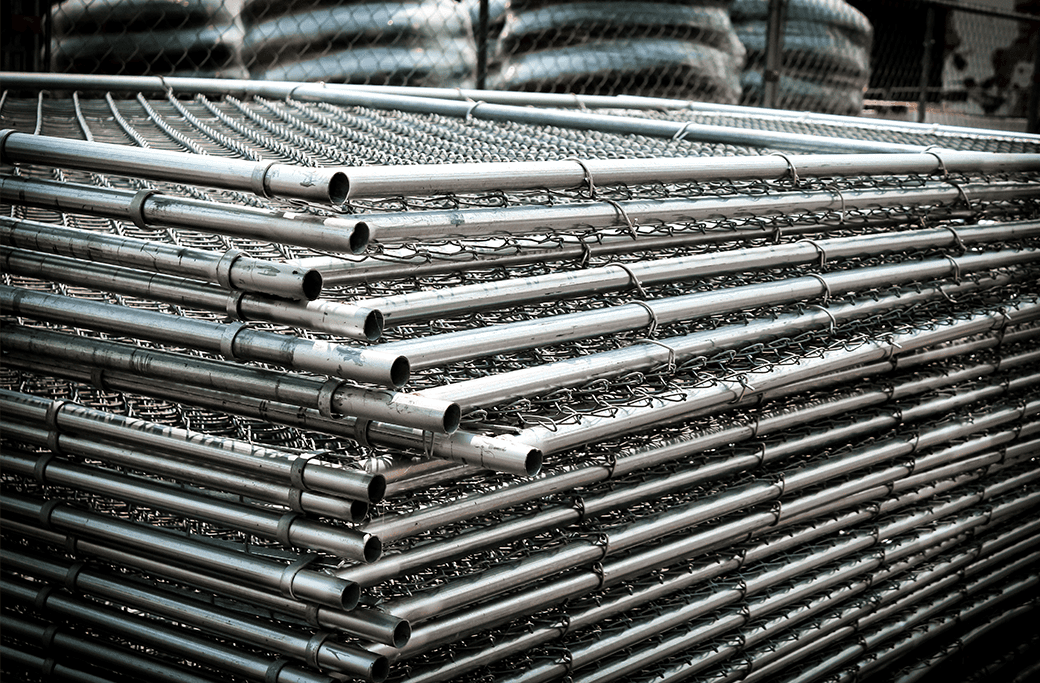
- Removal: Once the fencing is no longer needed, it can be removed and taken away.
At Mobile Fencing Inc., our full-service approach helps make the rental process easier from installation through removal.
How Is Temporary Fencing Different From Permanent Fencing?
The primary difference is that temporary fencing is designed to be installed, used, and removed as needed.
Permanent fencing is generally installed as a long-term property improvement, while temporary fencing provides a flexible solution for projects and situations that have a defined beginning and end.
Temporary fencing can therefore be especially useful when you need security or crowd control now but don’t want a permanent structure.
Why Choose Mobile Fencing Inc.?
Mobile Fencing Inc. provides temporary fencing solutions throughout New England for construction projects, events, landscaping work, municipal projects, and other temporary applications.
Our team can help determine the appropriate fencing system, plan the layout, and coordinate delivery, installation, and removal based on your project’s needs.
Whether you need fencing for a weekend event or a construction project lasting several months, we’re here to help you secure your site.
Need temporary fencing in New England? Contact Mobile Fencing Inc. to discuss your project and fencing requirements.