
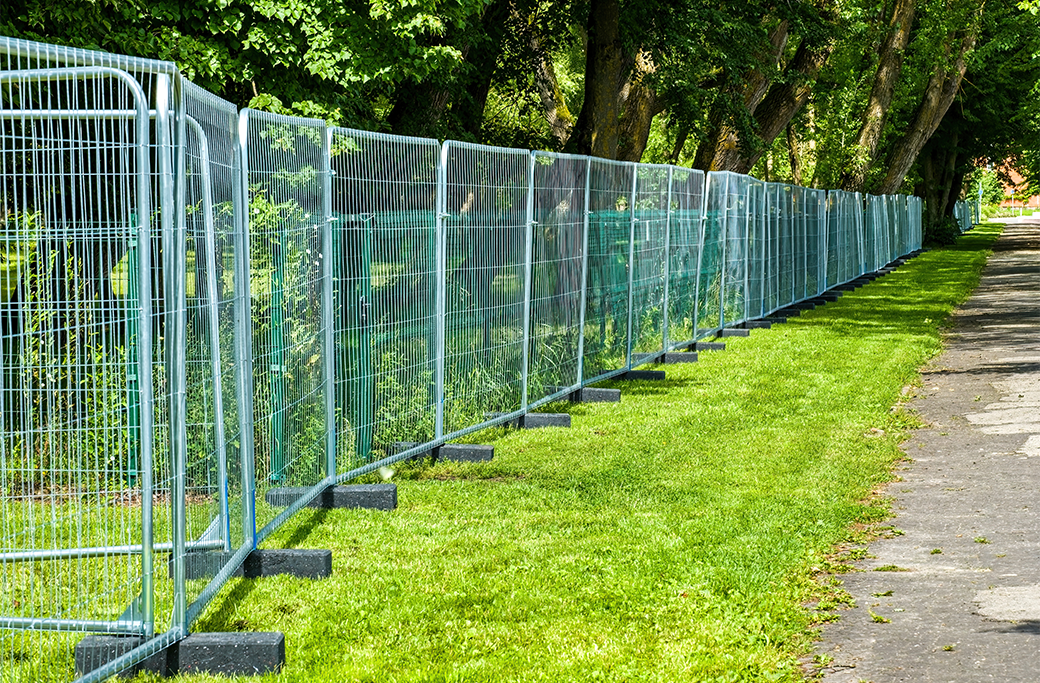
Yes, temporary fencing can often be installed on uneven ground, including grass, gravel, and some sloped areas. However, the appropriate fencing system and installation method depend on ground stability, slope, drainage, weather exposure, and site conditions. Not every temporary fence is suitable for every surface, so evaluating the terrain before installation is essential.
Across New England, construction sites, outdoor festivals, landscaping projects, and commercial properties rarely offer perfectly level ground. At Mobile Fencing Inc., we help customers consider these conditions when planning temporary fencing.
Can Temporary Fencing Be Installed on a Slope?
Temporary fencing can often follow gradual changes in elevation, but slopes introduce several considerations.
As the ground rises or falls, fence panels may need adjustments to maintain appropriate alignment and minimize gaps beneath the fencing. Uneven terrain can also affect the positioning and stability of supports.
Steeper slopes may require a different fence layout, installation approach, or fencing system. Our team can review your site’s conditions to help determine a practical solution.
Does Temporary Fencing Work on Grass?

Temporary fencing layouts must account for ground conditions, elevation changes, and site access.
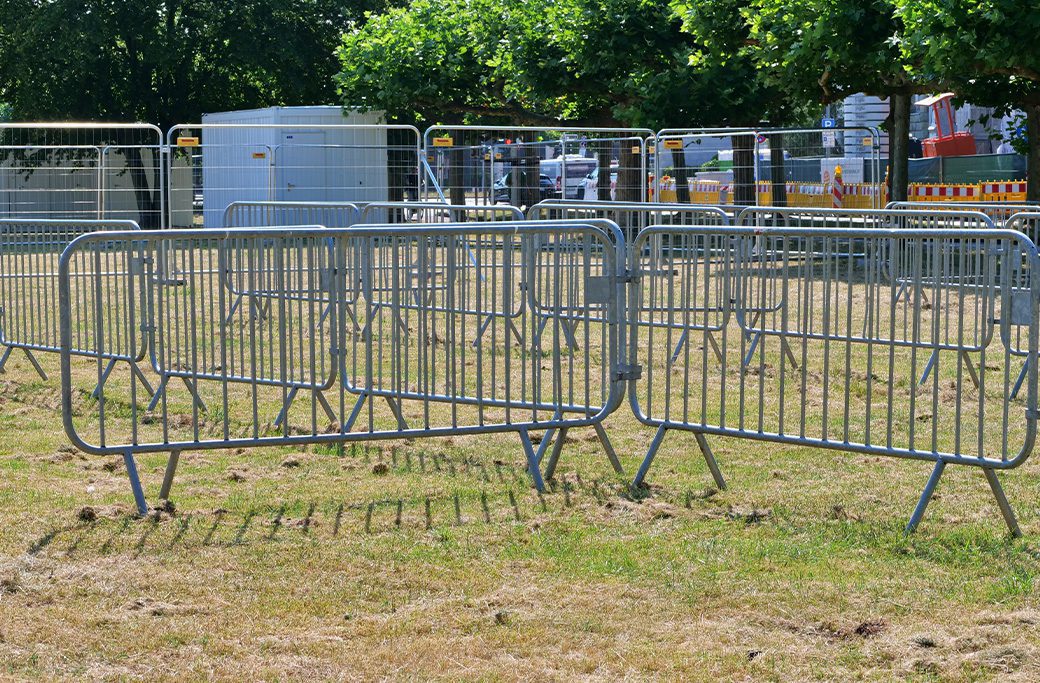
Yes, grassy areas are common locations for temporary fencing at festivals, sporting events, construction sites, and landscaping projects.
However, grass alone doesn’t determine whether a fence can be installed safely. The firmness of the soil beneath it matters just as much.
Soft or saturated ground may not adequately support certain fencing systems. Drainage, recent rainfall, and the possibility of disturbing landscaped areas should all be considered.
For projects involving new landscaping, our guide to protecting landscaping projects with temporary fencing offers additional planning considerations.
Can Temporary Fencing Be Installed on Gravel?
Temporary fencing can often be installed on gravel, provided the surface and underlying ground can adequately support the selected system.
Loose gravel, deep aggregate, or poorly compacted material may allow supports to shift or settle. Even gravel that appears firm can conceal unstable soil underneath. Before installation, it’s important to consider gravel depth, surface conditions, drainage, and how the fencing will be supported.
Working with grass, gravel, slopes, or soft soil instead of pavement? Learn what to consider when installing temporary fencing on uneven ground.
What Happens When the Ground Is Muddy or Soft?

Slopes and irregular ground conditions may require adjustments to fencing layout and installation.
Muddy or saturated soil can complicate temporary fence installation and reduce stability.
Potential concerns include:
-
- Reduced stability: Soft soil may not provide sufficient support.
- Shifting or settlement: Fence bases can move or sink as ground conditions change.
- Anchoring difficulties: Saturated soil may affect the suitability of ground-installed supports.
- Drainage problems: Standing water can weaken surrounding ground conditions.
New England’s spring thaw, heavy rain, and changing seasonal conditions make these concerns especially important.
After significant weather, fencing should be reassessed for movement, leaning, or changes in ground support. If conditions become unsafe, the installation may need to be adjusted.
Which Temporary Fence Type Works Best on Uneven Terrain?
The right fencing system depends on the terrain, project purpose, security needs, and required access.
Temporary Chain Link Fencing
Temporary chain link fencing is commonly used around construction sites and commercial properties. Depending on the configuration, it may offer options for accommodating changes in elevation. Ground conditions must be evaluated before selecting an installation method.
Freestanding Block-and-Panel Fencing
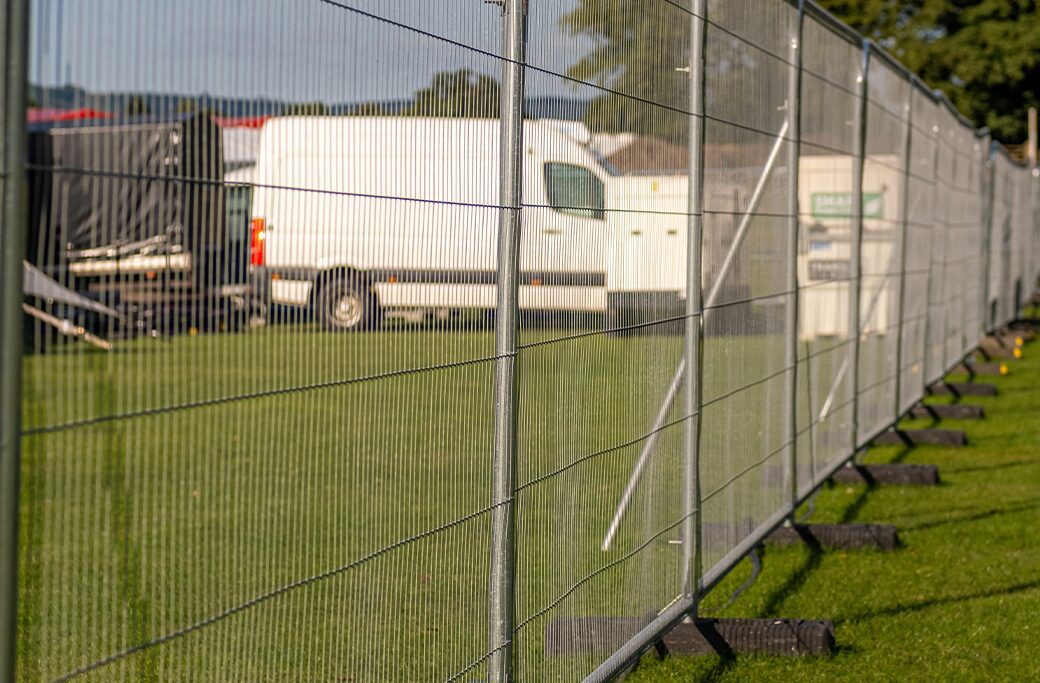
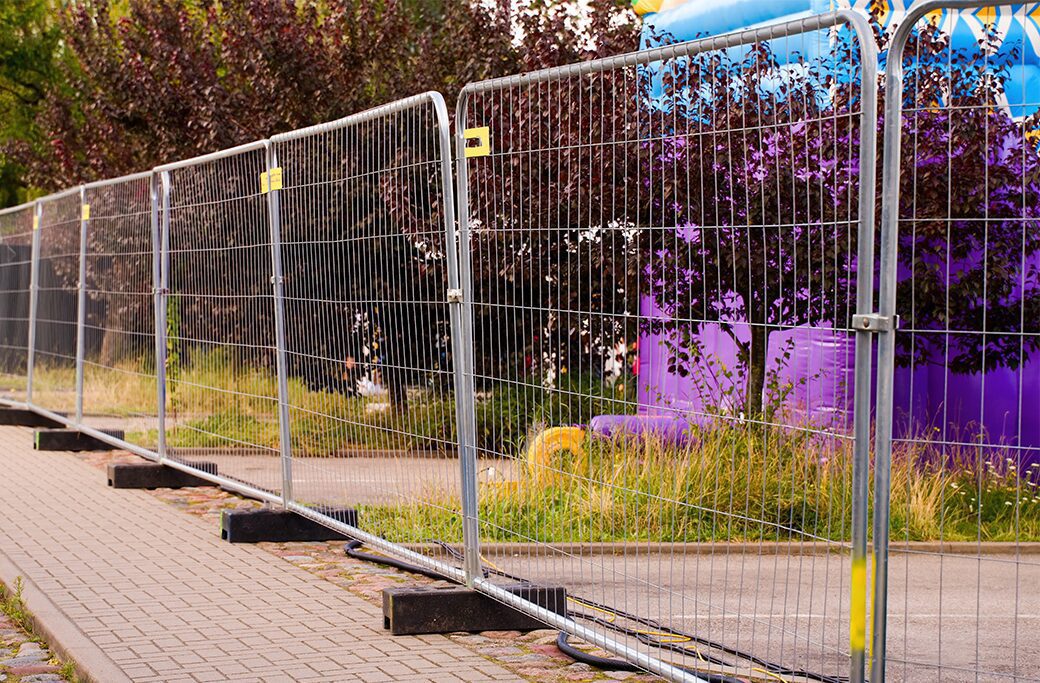
Block-and-panel systems use freestanding supports rather than relying exclusively on in-ground posts. They’re useful for many construction and event applications, but their bases require suitable support. Uneven or soft ground may limit their suitability.
Pedestrian Barricades
Pedestrian barricades are commonly used to guide crowds, establish queues, and define restricted areas at events. They’re generally better suited to pedestrian management than securing a construction perimeter, and their placement must account for surface stability.
Learn more in our guide to choosing the right type of temporary fence.
What Should I Tell My Fencing Provider About My Site?
Providing accurate site information helps us evaluate your fencing requirements and prepare a more useful rental quote.
Before contacting our team, gather:
-
- Site address and project location
- Ground surface: grass, dirt, gravel, or mixed terrain
- Approximate slopes or elevation changes
- Soil firmness and gravel conditions
- Drainage concerns or areas prone to standing water
- Approximate fencing footage
- Gates, entrances, and equipment access points
- Expected rental duration
- Preferred installation date
- Photos or a site plan showing the terrain
Photos of particularly uneven areas can help identify questions that should be addressed before installation.
Temporary Fencing for Challenging New England Sites
From Rhode Island construction projects to Massachusetts festivals and commercial properties in Connecticut, New Hampshire, and most of Maine, ground conditions vary considerably.
At Mobile Fencing Inc., we offer temporary chain link fencing, block-and-panel fencing, and pedestrian barricades for a range of applications.
Our team can help evaluate your project’s fencing requirements, discuss site conditions, and identify appropriate rental options. Some terrain may require additional planning or may not be suitable for a particular fencing system.
Uneven Ground? Let’s Find the Right Fencing Solution.
Your project doesn’t have to be perfectly level to explore temporary fencing options.
Whether you’re securing a construction site, planning an outdoor event, or protecting a commercial property, our team can help you evaluate your terrain and fencing needs.
Contact Mobile Fencing Inc. today to discuss your project and request a free quote.