
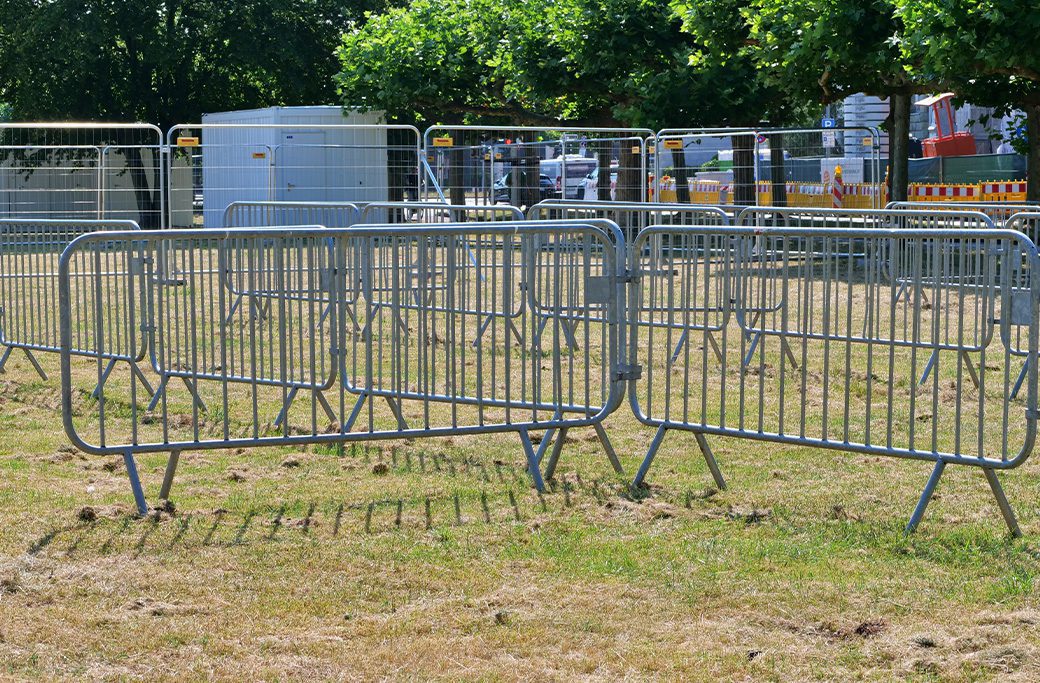
How Much Temporary Fencing Do I Need?
To estimate temporary fencing needs, measure the total length of the perimeter or areas requiring fencing in linear feet. Include gates, access points, separate work zones, and any detours around obstacles in your layout. Your final fencing quantity depends on site conditions and installation requirements; our team can help confirm what you need.
Whether you’re planning a New England construction site, outdoor event, commercial property project, or temporary work area, start with the fence line, not the property’s square footage.
How Do I Calculate Temporary Fencing Linear Footage?
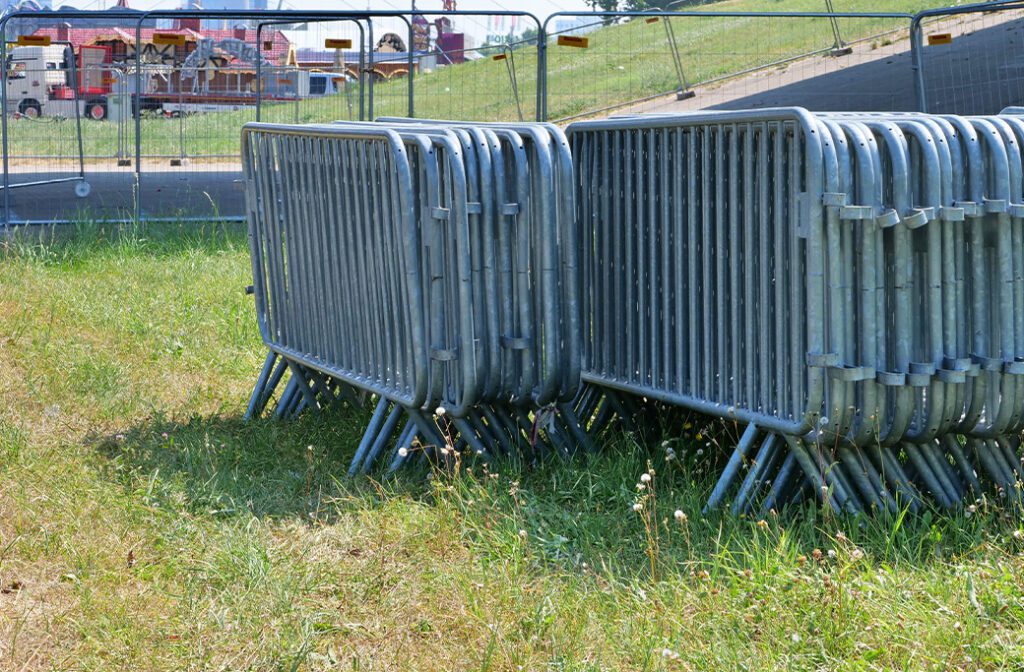
Include gate locations and widths when sharing your fencing layout.
Linear footage measures length. A fence run measuring 75 feet represents 75 linear feet, regardless of the size of the area behind it.
Linear footage = Total length of all planned fence runs.
Sketch the layout, measure each run, and add the lengths together. Follow the actual fencing route, including corners and detours. You may only need to enclose a work area rather than the entire property boundary.
How Much Fencing Do I Need for a Rectangular Site?
For a rectangle, use:
Perimeter = 2 × (Length + Width)
-
- Site length: 100 feet
- Site width: 50 feet
- Estimated perimeter: 2 × (100 + 50) = 300 linear feet
This assumes all four sides are enclosed. It describes the perimeter, not an exact panel order.
Use our rectangular perimeter calculator below to try your dimensions.
Estimate Your Rectangular Perimeter
Do Gates Count Toward Temporary Fencing Measurements?
Show gates and access openings on your layout, including their widths and intended uses. A pedestrian entrance and an equipment entrance may require different configurations.
Keep the full perimeter measurement and identify gates separately. Don’t automatically subtract gate widths: gates form part of the enclosure, while an intentional unfenced opening is different. We’ll use your layout to determine the combination of standard panels and gates.
What If My Project Has Multiple Fenced Areas?
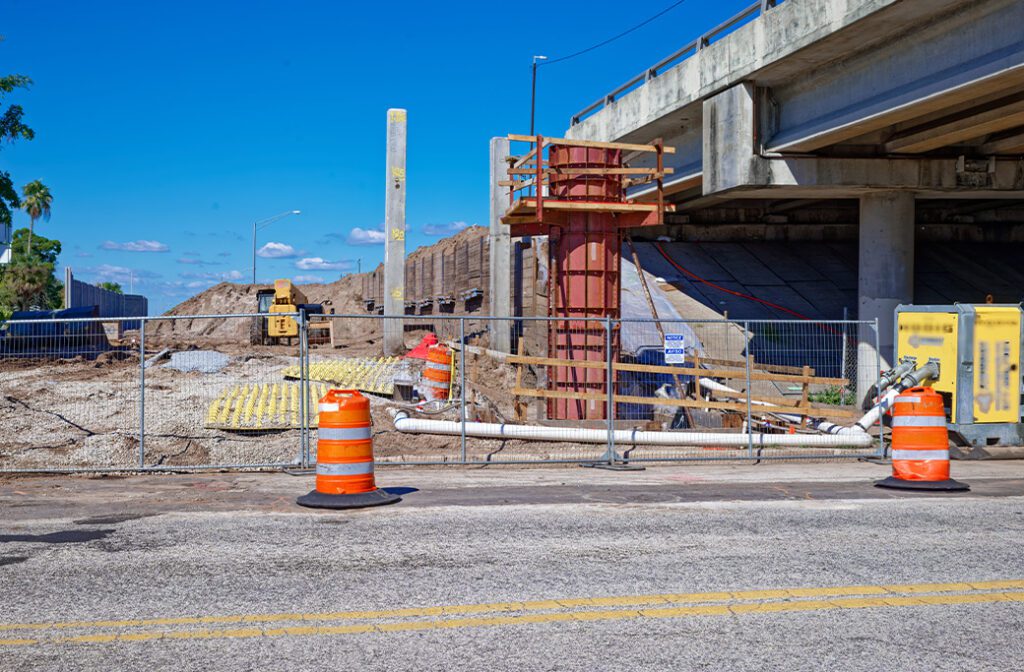
Measure each enclosure separately, counting any shared fence line once.
Measure each separate enclosure and add the totals.
For example, a 100-by-50-foot work zone needs a 300-foot perimeter. A separate 20-by-20-foot equipment storage area adds 80 feet, giving an estimated 380 linear feet.
Include event sections and other restricted areas, too. If zones share a fence line, count that shared section once.
Can I Estimate Temporary Fencing From a Site Plan?
Yes. A scaled site plan, aerial imagery, or property measurements can help you outline the proposed fence route and estimate each run.
Mark gates, buildings, slopes, and obstacles. Aerial estimates may miss conditions visible on the ground, so measurements and the proposed layout should be verified before installation.
What Information Should I Provide for an Accurate Quote?
Send us:
-
- Project address and location
- Approximate linear footage
- Project or event type
- Installation surface
- Expected rental duration
- Installation date
- Gates and access requirements
- Separate work zones
- Obstacles or unusual site conditions
- Site plans or photos, when available
For budgeting, read How Much Does Temporary Fencing Cost?.
Get the Right Amount of Temporary Fencing for Your Project
Our team helps determine fencing quantities and placement for temporary fence rental throughout Rhode Island, Massachusetts, Connecticut, New Hampshire, and most of Maine.
We handle delivery, installation, and removal. Learn what is included with temporary fence rental, then send us your dimensions, timeline, and access needs.
Request your temporary fencing rental quote today. Let’s turn your site sketch into a practical fencing plan.