
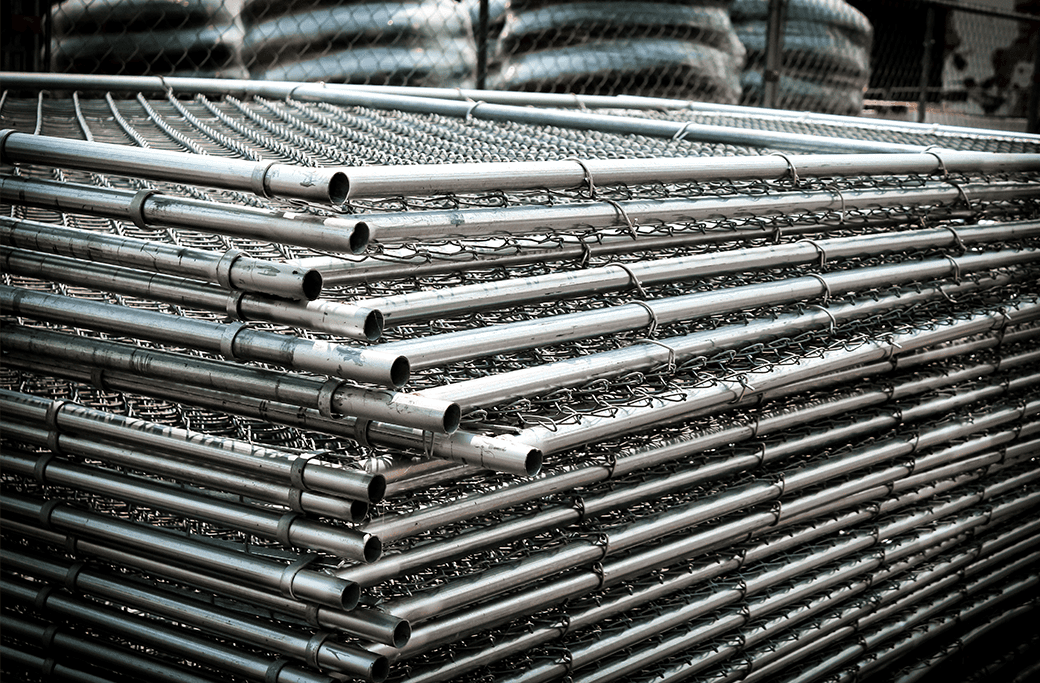
Whether you are managing a construction project, organizing an outdoor event, or coordinating disaster relief, a temporary fence gives you a fast, flexible perimeter without permanent foundations. This guide covers the main types of temporary fencing solutions, real-world applications in 2024–2026, panel specs, cost considerations, and the accessories that turn basic panels into a complete security and crowd control system.
What Is Temporary Fencing?
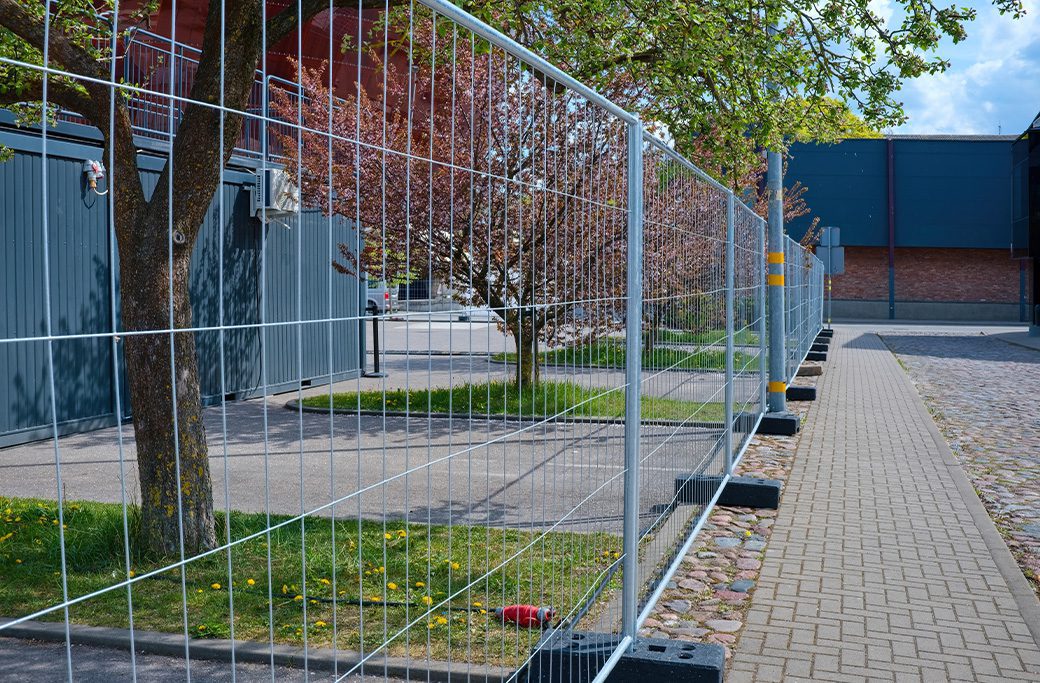
Temporary fencing is a portable barrier system used to secure areas for a limited time-typically days to months-without digging post holes or pouring concrete footings. Temporary fencing is constructed from materials such as galvanized steel or heavy-duty plastic. Core components include:
-
- Panels – prefabricated sections, commonly 6 feet high by 10 or 12 feet long.
- Bases or stands – steel feet, concrete blocks, or recycled rubber that keep panels upright on hard ground.
- Couplers and clamps – hardware that locks panels together into a continuous fence line.
- Gates – pedestrian and vehicle access points integrated into the perimeter.
- Stabilization – sandbags, bracing, or T-posts for windy or uneven sites.
Unlike permanent fencing, a temporary fence can be repositioned and adapted as needed for events or construction. It allows for fast set up and reconfiguration, and modern systems let small crews secure an average city jobsite in a single day. Installation of temporary fences is quick and hassle-free, with no long-term changes to the property.
Main Types of Temporary Fencing Systems
Different sites demand different fencing. Here is a quick view of the main categories:
-
- In-ground chain link – posts driven into soil or gravel, supporting 6-foot or 8-foot chain link fabric. Chain link fencing is an affordable perimeter security solution and works well for long-running projects of six months or more. Heights of 8 feet offer stronger deterrence on higher-risk sites.
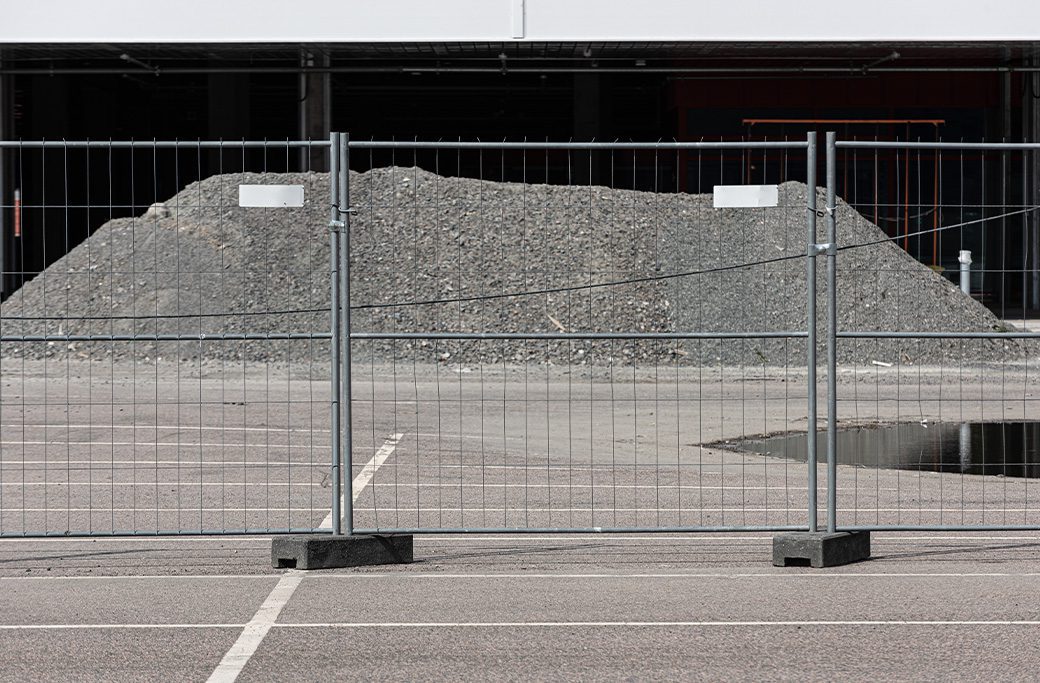
- Freestanding temporary fence panels – steel panels (typically 6′ × 12′ or 6′ × 10′) dropped into heavy bases and linked with clamps. Panel fencing is preferred for short-term events and construction sites, especially on hard surfaces like parking lots, concrete pads, and stadium concourses.
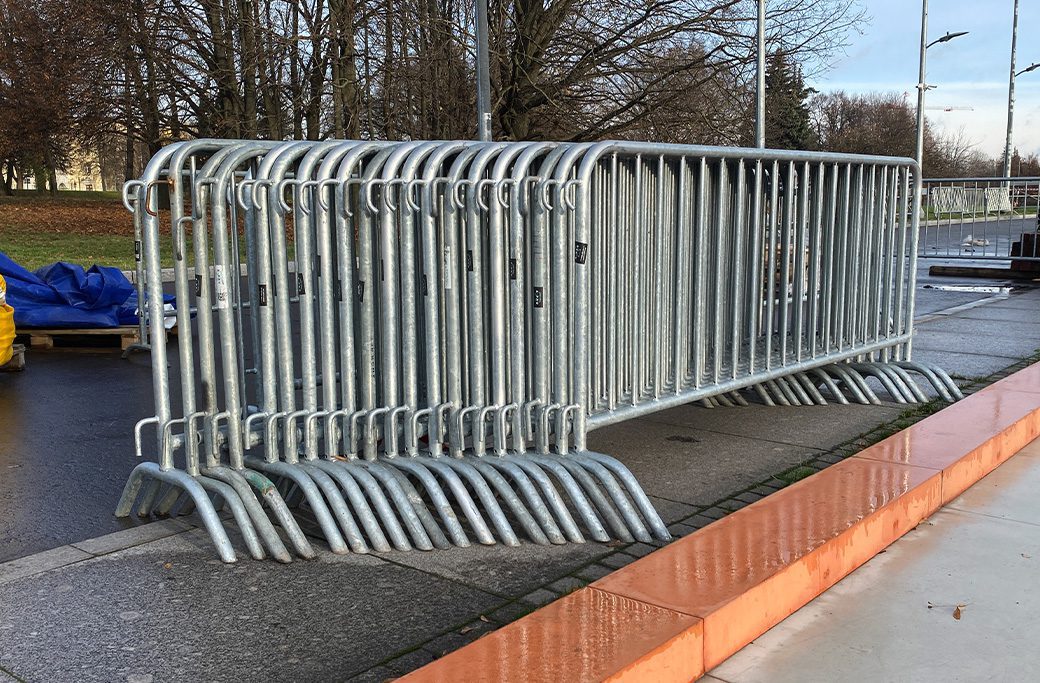
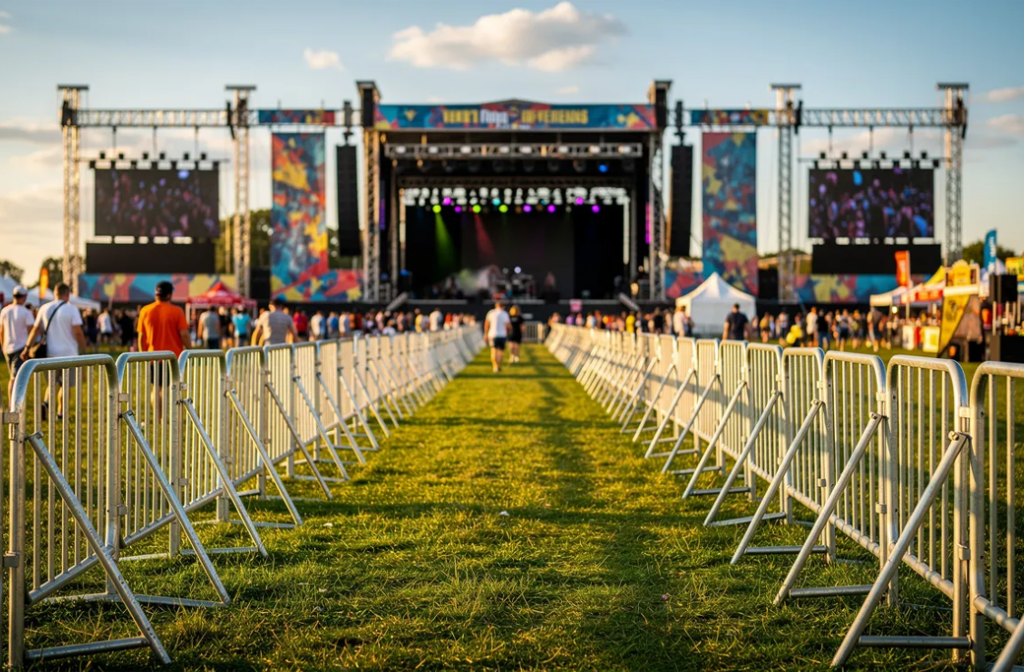
- Crowd control barriers – low, interlocking metal barricades (often called bike-rack barriers) used to form lines, manage queues, and direct spectator flow at concerts and sports events.
- Specialty add-ons – privacy windscreens, sound-dampening screens, debris netting, anti-climb mesh, and solid hoarding for high-profile or sensitive projects.
The sort of system you choose depends on duration, security level, ground conditions, and budget.
Common Uses: From Construction Sites to Crowd Control
Temporary fencing shows up nearly everywhere a site needs a defined, controlled perimeter. Below are the most common applications in 2024–2026:
-
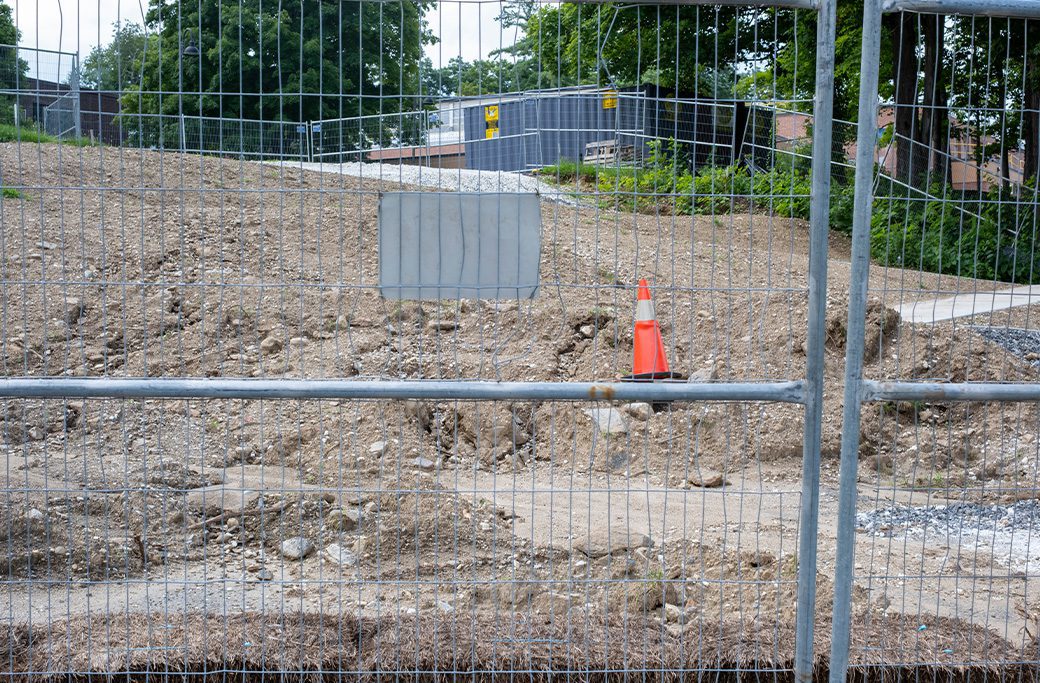
- Securing construction sites – temporary fencing is often used to block public access to construction sites, keeping unauthorized personnel away from hazards. It can deter trespassing and reduce theft and vandalism, and panels prevent theft and protect valuable equipment on-site such as tools, copper, and machinery.
- Roadworks and infrastructure – fencing separates workers, vehicles, and pedestrians on bridge repairs, utility trenches, and highway projects, reducing liability by preventing accidents in hazardous areas. Panels provide a clear boundary for hazardous areas so traffic flows safely around the job.
- Crowd control at events – temporary fencing provides crowd control at events like concerts and festivals, defining entrances, exits, VIP zones, and emergency routes. It guides foot traffic efficiently at events like marathons, city parades, and outdoor sporting tournaments.
- Disaster relief – temporary fencing aids in emergency response by securing unstable areas. During the 2025 hurricane season, FEMA operations deployed portable perimeters around logistics hubs and shelters.
- Other short-term uses – school renovation projects, film and TV production sets, temporary car parks, outdoor retail pop-ups, animal enclosures at agricultural shows, and even sectioning off fields for seasonal farming activities.
Across all these applications, temporary fencing enhances site security by discouraging unauthorized entry and theft.
Temporary Fence Panels: Sizes, Materials & Key Features
This section covers the technical details a buyer or renter should evaluate before placing an order.
-
- Dimensions – temporary fence panels are typically 6-by-12 feet in size, though 4-foot and 8-foot heights are available for special applications or local code requirements. Panel size affects how many items you need for a given perimeter.
- Frame construction – welded steel tubing, commonly 1 3/8-inch outer diameter, galvanized to resist rust. Wall thickness of approximately 0.065 inches provides the rigidity needed for repeated use.
- Mesh infill – chain link fabric (11.5–12.5 gauge wire, 2-inch diamond mesh) or welded wire mesh for increased rigidity and anti-climb properties. The variety of mesh options lets you fit the panel to your security level.
- Bases and weights – heavy concrete blocks, recycled rubber feet, or steel bases. On windy or uneven ground, sandbags or additional weights improve stability. Temporary fences are secured with top clamps and held in place by weighted base plates.
- Connection hardware – saddle clamps, locking bolts, and tamper-resistant fittings reduce gaps between panels so the fence line acts as a continuous barrier.
- Safety add-ons – top rails, safety caps on exposed wire, reflective strips, and colored windscreens for branding or zoning (e.g., red = no exit, green = entry).
Planning Your Temporary Fencing Layout
Good layout planning prevents costly mid-project changes. Follow these steps:
-
- Measure the perimeter – use a site plan or tape measure. Convert total linear footage into the number of fence panels required, adding roughly 10 percent extra for corners, overlaps, and gates.
- Plan access points – include vehicle gates for deliveries, pedestrian gates for workers, and clearly marked emergency exits for crowd control scenarios.
- Assess ground and wind – on soil or gravel, in-ground posts support long-duration installs. On concrete, asphalt, or indoors, freestanding panels with weighted bases are the easy way to go. For windy or exposed locations, add bracing or heavier bases.
- Check regulations – temporary fencing helps meet local municipal codes and safety regulations. Contact your local building or event permitting office to confirm height limits, setbacks from sidewalks, and any required permits.
Example layout: A typical 200-linear-foot construction site perimeter needs approximately 17 standard 12-foot panels, one vehicle gate, and one pedestrian gate-plan for 19–20 panels to account for corners and overlap.
Renting vs Buying Temporary Fencing
The choice between renting and buying comes down to project duration, storage, and reuse frequency.
The choice between renting and buying comes down to project duration, storage, and reuse frequency.
|
Factor |
Rent |
Buy |
|---|---|---|
|
Upfront cost |
Low (~$1.50–$3.50/linear ft/month) | Higher (~$8–$16/linear ft) |
|
Install & removal |
Included by provider | Your crew or subcontractor |
| Maintenance | Provider handles repairs |
You store, transport, and fix |
| Best for | Events, emergency response, projects under 18 months |
Multi-site contractors with repeat needs |
Temporary fencing is cost-effective compared to permanent solutions in almost every short-term scenario. Rental providers often offer sliding-scale discounts for larger footage or longer durations, saving you money on big jobs. Hidden costs of ownership-storage space, transport between sites, and replacing damaged bases-add up fast.
A simple rule of thumb: if you will reuse panels across many projects each year, invest in a core stock. If your need is occasional, rent and let the provider handle logistics.
Accessories: Windscreen, Stabilization & Crowd Control Add-Ons
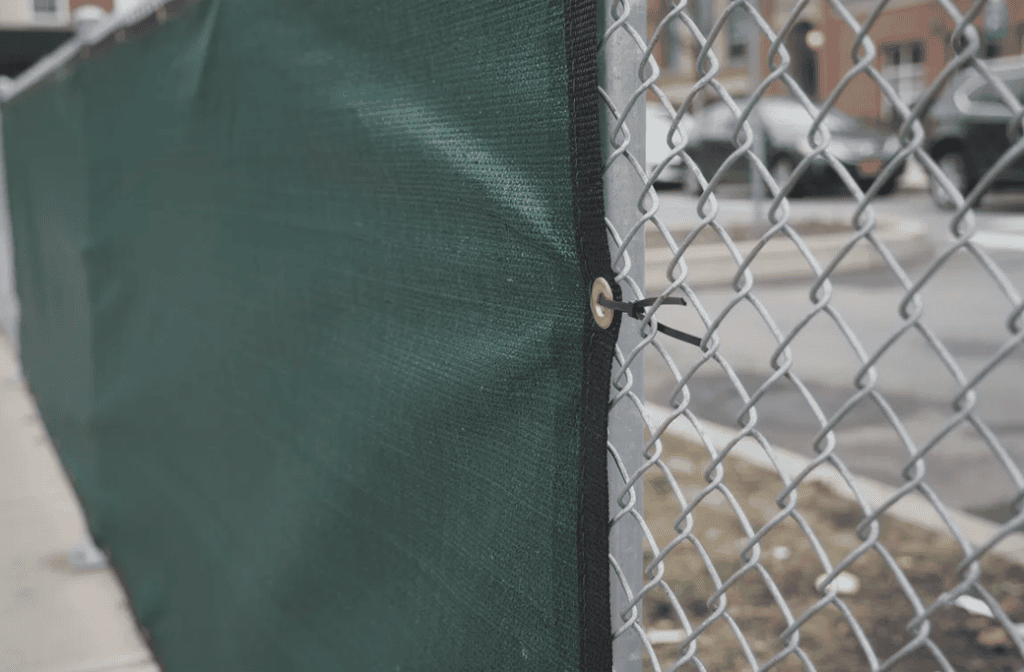
The right accessories transform a basic temporary fence into a privacy barrier, dust screen, or robust crowd management system.
-
- Privacy windscreen – windscreen blocks views and protects against dust and debris. Temporary fencing can be fitted with privacy screens and branding opportunities, which is why opaque fabric is standard around city construction sites and high-profile events.
- Stabilization – T-posts, cross-bracing, extra bases, and sandbags keep taller fences secure on exposed or elevated ground.
- Gates and access hardware – swing and slide gates for vehicles, smaller pedestrian gates, and locking options integrate with standard fence panels for controlled entry and exit.
- Crowd control add-ons – signage brackets, banner mesh for directions or branding, and dedicated queue barriers near entrances support efficient crowd flow at festivals and sporting events.
How Professional Temporary Fencing Services Work
From first contact to final removal, the process is straightforward:
-
- Quote – you provide dates, address, perimeter length, ground type, and intended use (construction, event, etc.). The provider calculates the price based on panel count, accessories, and duration.
- Delivery and installation – crews arrive on schedule, confirm the layout on site, assemble panels, place gates, and run final safety checks. Most city jobsites are fully installed in a single day.
- Mid-project service – as construction progresses or an event layout changes, providers can adjust fence lines, deliver extra panels, or handle repairs on short notice.
- Pickup and removal – at the end of the rental period, crews dismantle, load, and clear the site quickly so your project handover or venue opening stays on track.
Multi-site or multi-state projects can be coordinated through a single provider, simplifying management for large contractors and event organizers. To get results that match your timeline, contact a provider early and share as much site detail as possible.
Ready to Secure Your Site with Mobile Fencing Inc?
At Mobile Fencing Inc, we specialize in fast, reliable temporary fencing solutions customized to your project needs. Whether it’s construction, events, or emergency response, our expert team ensures professional delivery, installation, and removal with minimal disruption.
Get your free quote today and experience the peace of mind that comes with secure, flexible, and cost-effective temporary fencing. Contact Mobile Fencing Inc now to protect your site and keep your project on track!