

What Type of Temporary Fence Do I Need?
Quick answer: The right temporary fence depends on what you’re trying to secure, the site conditions, how long you need the fencing, and whether you need perimeter security, crowd control, or added stability. Construction sites often use chain link fencing, while block-and-panel systems can provide added stability and pedestrian barricades are designed for managing foot traffic.
Choosing the Right Temporary Fence
Not every project has the same fencing requirements. A construction site may need a secure perimeter, while an outdoor festival may need fencing primarily to direct crowds and control access.
Before choosing a temporary fence, consider:
-
- What needs to be secured?
- How large is the area?
- Will the public be nearby?
- What are the ground and weather conditions?
- How long will the fence be needed?
- Will the layout need to change during the project?
Chain Link Temporary Fencing
Best for: Construction sites, commercial projects, and general perimeter security
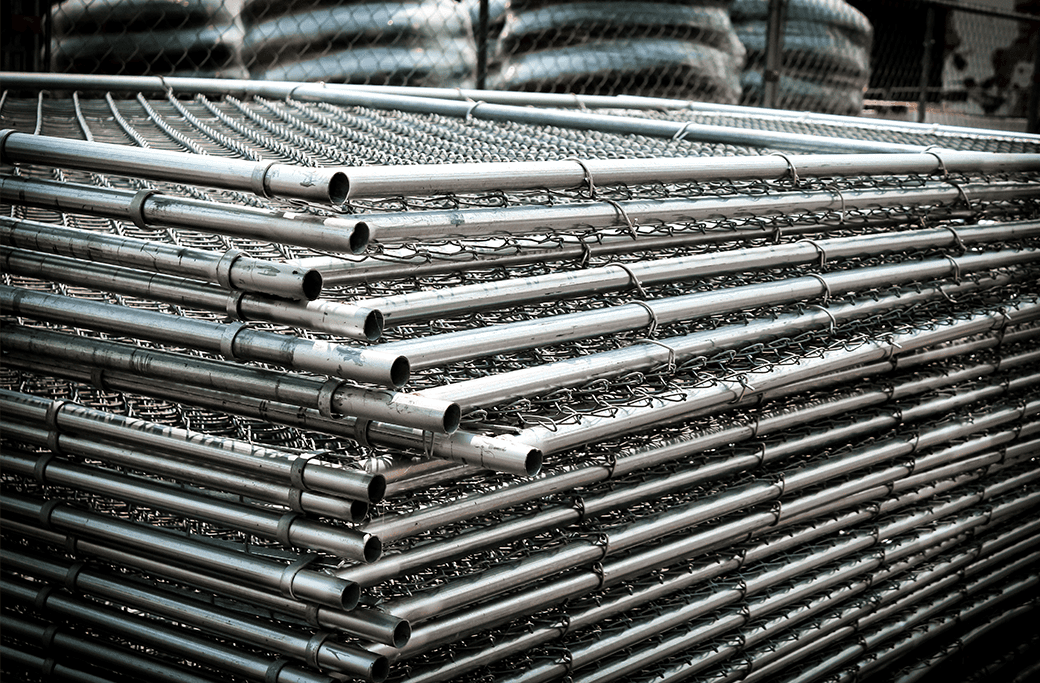
Chain link panels are a versatile temporary fencing option for projects that need a defined perimeter and controlled access.
They can help secure:
-
- Construction sites
- Equipment and material storage areas
- Commercial properties
- Demolition areas
- Temporary work zones
Chain link fencing can also be configured with gates to provide controlled access for workers, vehicles, and deliveries.
Block-and-Panel Fencing
Best for: Projects where stability and flexible placement are important
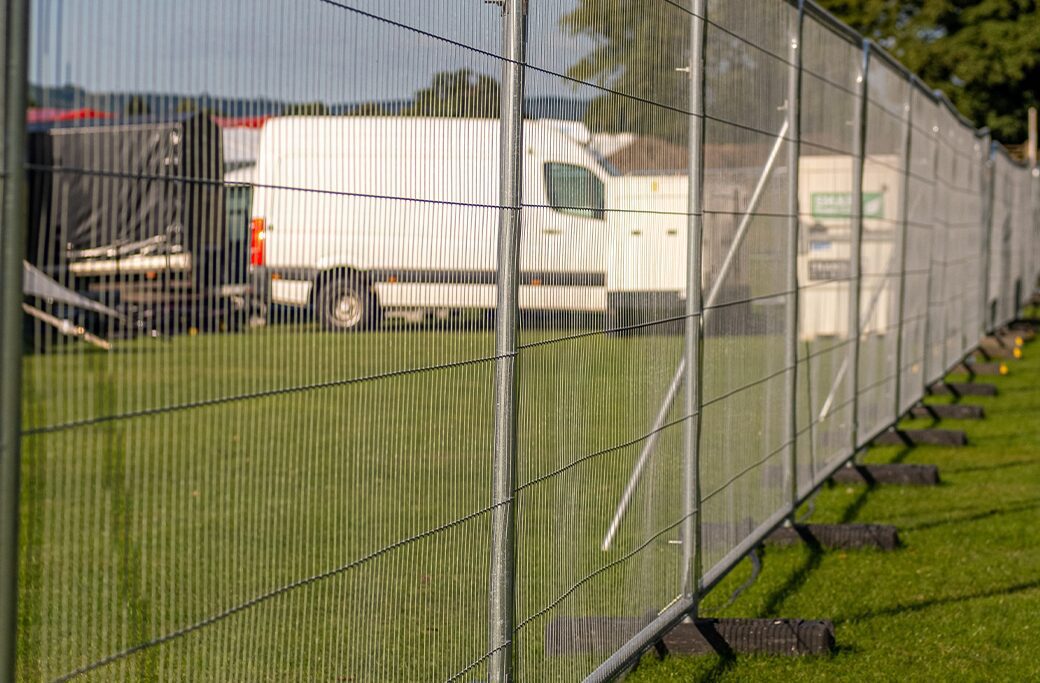
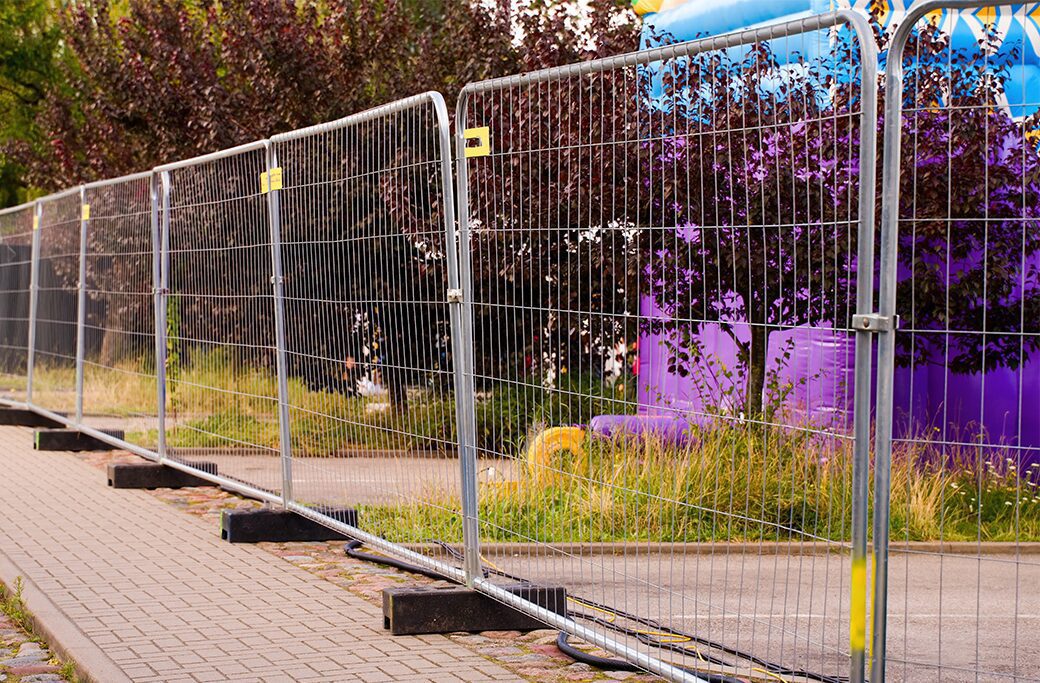
Block-and-panel fencing uses panels supported by weighted bases rather than being installed directly into the ground. This makes it useful for applications where ground penetration isn’t practical or where additional stability is needed.
It can be a good option for:
-
- Construction sites
- Events
- Landscaping projects
- Areas with paved surfaces
- Projects with changing layouts
The appropriate base and configuration depend on site conditions, fence height, weather exposure, and other project requirements.
Pedestrian Barricades
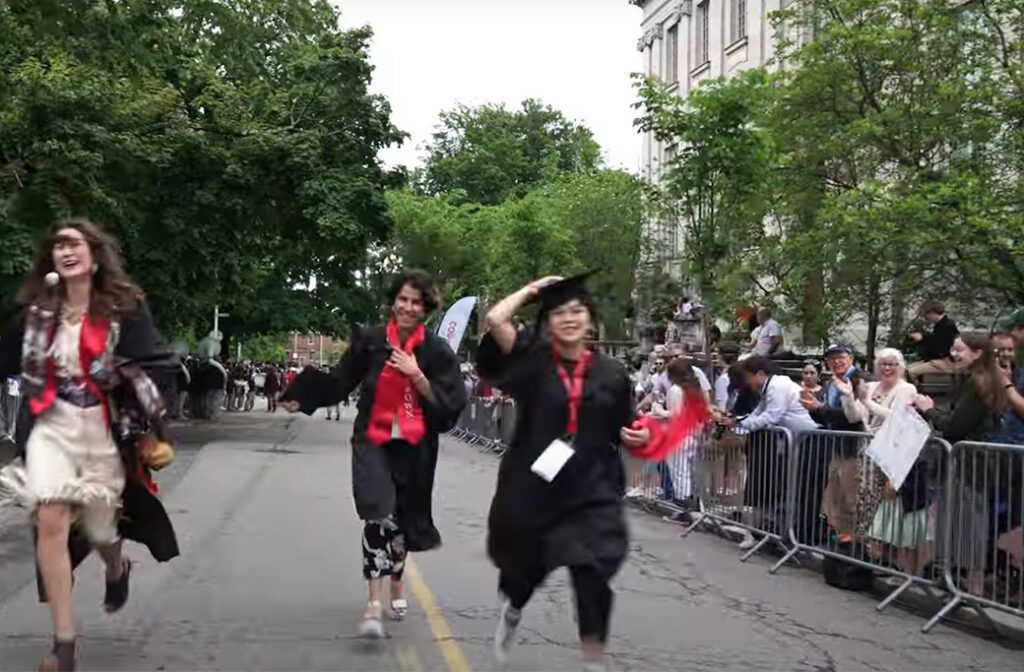
Best for: Crowd control and directing foot traffic
Pedestrian barricades are designed for situations where the primary goal is managing people rather than creating a high-security perimeter.
They can help organize:
-
- Event entrances and exits
- Queues
- Festivals
- Sporting events
- Concerts
- Walkways and restricted areas
Barricades help create clear paths and keep crowds away from areas that need to remain restricted.
What If I’m Not Sure Which Fence I Need?
You don’t necessarily have to determine the fencing solution on your own.
A professional temporary fencing provider can evaluate factors such as the site layout, surface, project duration, security requirements, expected foot traffic, and weather exposure before recommending an appropriate system.
At Mobile Fencing Inc., we provide temporary fencing solutions throughout New England, including chain link fencing, block-and-panel systems, and pedestrian barriers.
Need help choosing temporary fencing? Contact Mobile Fencing Inc. to discuss your project and find a solution that fits your site.